

What is Psychotherapy Intervention?
Psychotherapy is a strategy to bring about positive changes in an individual’s behaviour or emotions. These treatments can be applied in contexts such as therapy, counselling, or personal development.
There are many different types of psychotherapy treatment, but the goal is the same, which is to improve mental and emotional health by taking action and using strategies with determination.
Psychotherapy Interventions Offered in Minda Inklusif
Cognitive Behavioural Therapy (CBT)
Dialectical Behaviour Therapy (DBT)
Acceptance and Commitment Therapy (ACT)
Psychodynamic Therapy
Eye Movement Desensitization and Reprocessing (EMDR)
Narrative Therapy
Important Note:
The choice of psychotherapy techniques depends on the individual’s needs and preferences, and the condition being treated. Each of our therapists has a different expertise.
Consulting with a mental health professional can help determine which psychotherapy technique might be suitable for you.
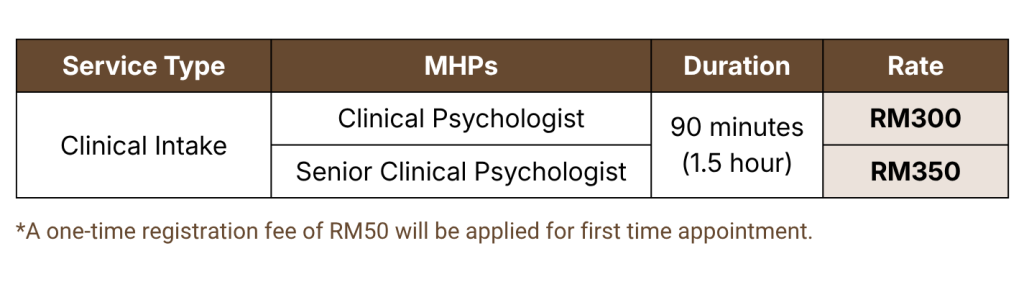
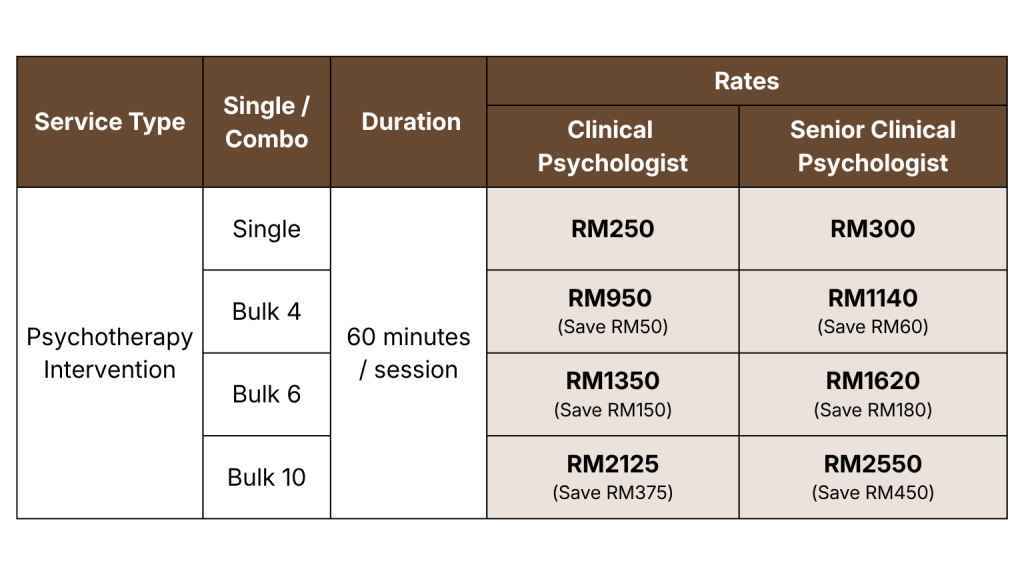
Psychotherapy Intervention Rate
Initial Session
Follow Up Session
Frequently Asked Questions
The choice of psychotherapy techniques depends on the individual’s needs and preferences, as well as the issues they are trying to address. Consulting with a mental health professional can help ensure that psychotherapy is right for you. After discussing it with your therapist, you can decide whether or not to continue.
The length of time for each psychotherapy session varies, but typically, a session takes 45 to 60 minutes.
The duration and number of sessions for psychotherapy varies depending on several factors, including the type of therapy, individual needs, and goals to be achieved. Below are general guidelines:
Short-Term Psychotherapy:
- Typically 6 to 20 sessions
- To address specific issues or sudden/acute symptoms
- Example: Crisis intervention, short-term behavioural therapy
Medium-Term Psychotherapy:
- 20 to 40 sessions
- Suitable for more complex issues or moderate symptoms
- Provides space for more in-depth and thorough examination, and building psychological skills
- Example: Interpersonal psychotherapy, dialectical behavioural therapy (DBT) typically for Borderline Personality Disorder
Sustaining or Supporting Therapy:
- Occurs occasionally in an on-going period
- Intends to maintain progress and prevent relapse
- Typically to manage chronic mental health conditions such as Schizophrenia
The duration of therapy depends on the individual’s needs and development, as well as the therapist’s recommendations. Having an open communication with the therapist can help you adjust the duration of therapy according to the circumstances of your situation.